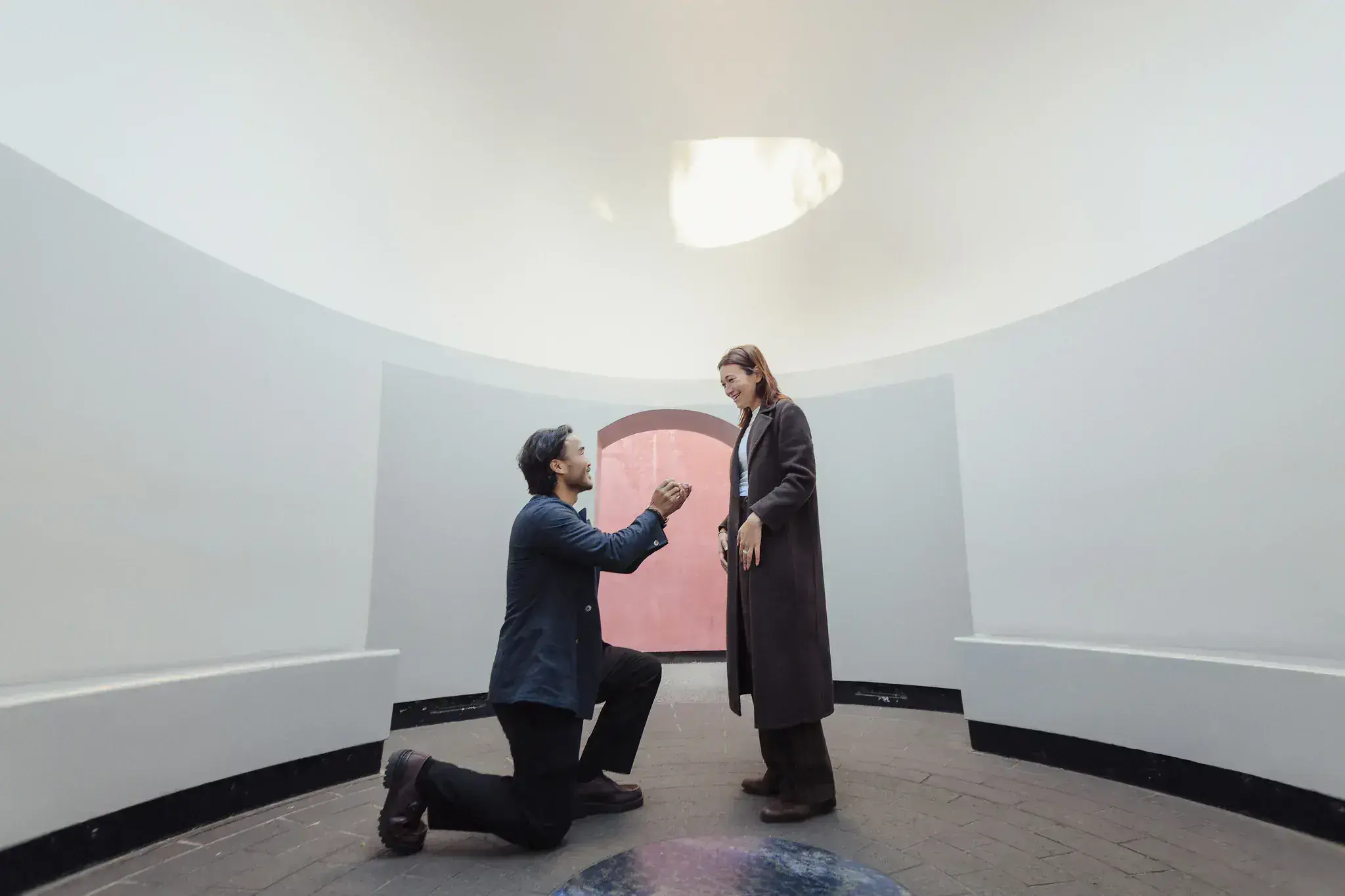
Dress for the activity and ground.
A beach, trail, city walk, home, and restaurant ask different things of shoes and fabric. Test whether you can sit, walk quickly, raise your arms, and stay warm without monitoring the outfit.


Coordinate formality rather than color.
Two people can wear different colors and still look connected when the level of formality and seasonal weight make sense together. Avoid making one person look prepared for dinner while the other looks prepared for a hike unless that contrast is intentional.
Use pattern and color deliberately.
Pattern can be excellent when it feels like the person wearing it. The problem is not visual interest; it is several competing ideas at once. If one element is loud, let the rest of the clothing and location give it room.


Skip the change unless it adds a real second chapter.
Changing clothes consumes time and can interrupt momentum. It is useful when the session genuinely moves from home to dinner or casual to formal, not simply to create more combinations.