Engagement sessions without awkward posing — see the work

wedding family photos divorced parents

Wedding family photographs with divorced parents and complicated relationships

A bride walking into her ceremony with her fatherA grandmother sharing an unscripted moment during a wedding

A useful family photograph plan is not a generic list. Divorce, remarriage, estrangement, loss, mobility, and chosen family affect who should be together, who should not be asked to stand together, and which photographs cannot be recreated. Sharing that context privately makes the formal set calmer and more respectful.

01

Send relationship context before sending combinations.

Relationship labels are more useful in the moment than names alone: “bride’s mom and dad,” “groom’s sister and her partner,” or “the couple’s chosen family” immediately explain why people belong in a photograph. Add names as a helpful second reference, and share any sensitive context privately before the wedding.

A flower girl hugging the bride during a wedding
01 · A flower girl hugging the bride during a wedding
A joyful redwood wedding ceremony with guests gathered close
02 · A joyful redwood wedding ceremony with guests gathered close
An emotional candid moment surrounded by wedding guests
03 · An emotional candid moment surrounded by wedding guests
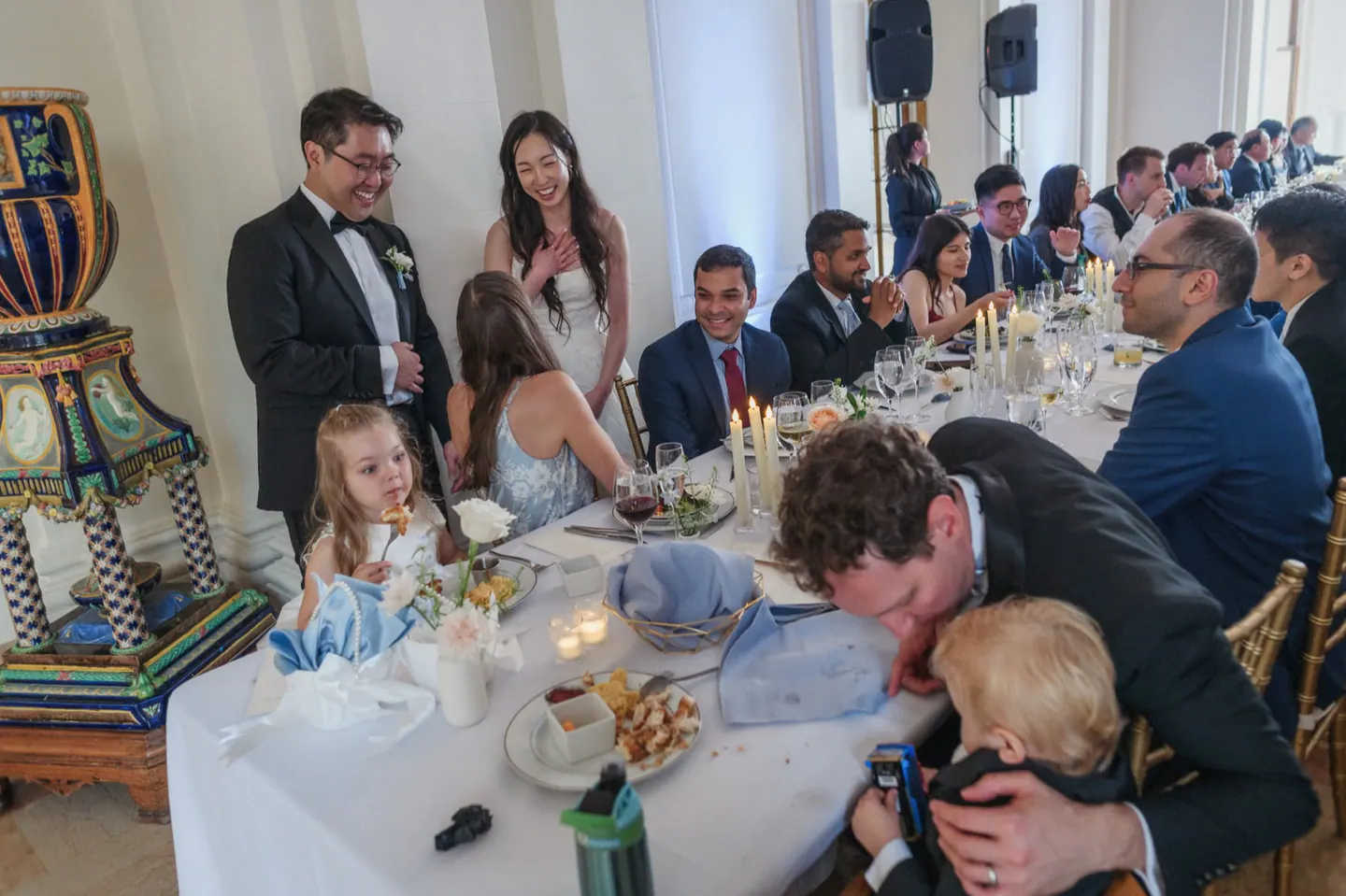
Family gathered together around a wedding dinner
04 · Family gathered together around a wedding dinner
02

Write every intended grouping explicitly.

Do not rely on a broad label such as immediate family when households have changed. Write each photograph as a complete relationship-based group, then add names: “bride with mom and dad — Linda and Robert,” for example. Include partners, stepparents, siblings, and chosen family instead of asking the photographer to infer who belongs.

03

Choose one helper who knows everyone.

The most effective assistant is a relative or close friend who recognizes the people on both sides and understands the relationships. They can gather the next group while the current one is being photographed, quietly flag a missing person, and prevent the couple from becoming the family-photo coordinator.

04

Order the list to reduce friction.

Photograph the largest neutral group first, then release people as the list becomes more specific. When two people should not be asked to interact, place their separate combinations in different parts of the sequence. Share that reasoning with the designated helper so nobody has to explain it publicly.

05

Leave room for relationships outside the formal list.

A concise formal set protects the necessary record, but documentary photographs can show the quieter reality: who checks in, who dances together, who carries history, and which friends function as family. Tell the photographer which relationships deserve special attention.

The short version

Keep these decisions visible.

  • Every person identified by relationship to the couple, with names included when helpful
  • Every essential combination written by relationship, with names as a secondary reference
  • One trusted helper who knows both families and has the final group list
  • A grouping order designed around comfort as well as speed
  • Chosen family and meaningful relationships identified for candid coverage

Questions couples ask

Use the guide to make a decision, not another mood board.

What should we decide first about family and guests?

Relationship labels are more useful in the moment than names alone: “bride’s mom and dad,” “groom’s sister and her partner,” or “the couple’s chosen family” immediately explain why people belong in a photograph. Add names as a helpful second reference, and share any sensitive context privately before the wedding.

What mistake creates the most pressure?

Photograph the largest neutral group first, then release people as the list becomes more specific. When two people should not be asked to interact, place their separate combinations in different parts of the sequence. Share that reasoning with the designated helper so nobody has to explain it publicly.

What is the short, practical version?

Keep these priorities visible: every person identified by relationship to the couple, with names included when helpful; every essential combination written by relationship, with names as a secondary reference; one trusted helper who knows both families and has the final group list; a grouping order designed around comfort as well as speed; chosen family and meaningful relationships identified for candid coverage.