Engagement sessions without awkward posing — see the work

unplugged wedding ceremony or phones

Unplugged wedding ceremony or phones allowed?

A grandmother sharing an unscripted moment during a weddingA bride walking into her ceremony with her father

An unplugged ceremony can protect faces, sightlines, and attention, but a rigid ban may not fit every family. The useful goal is a ceremony where guests understand how to participate and professional coverage is not blocked—not a public enforcement exercise.

01

Decide what problem you are solving.

A wall of phones in the aisle, guests live-streaming, flash, or constant movement are different issues. A focused request works better than copying unplugged language without knowing why.

A flower girl hugging the bride during a wedding
01 · A flower girl hugging the bride during a wedding
A joyful redwood wedding ceremony with guests gathered close
02 · A joyful redwood wedding ceremony with guests gathered close
An emotional candid moment surrounded by wedding guests
03 · An emotional candid moment surrounded by wedding guests
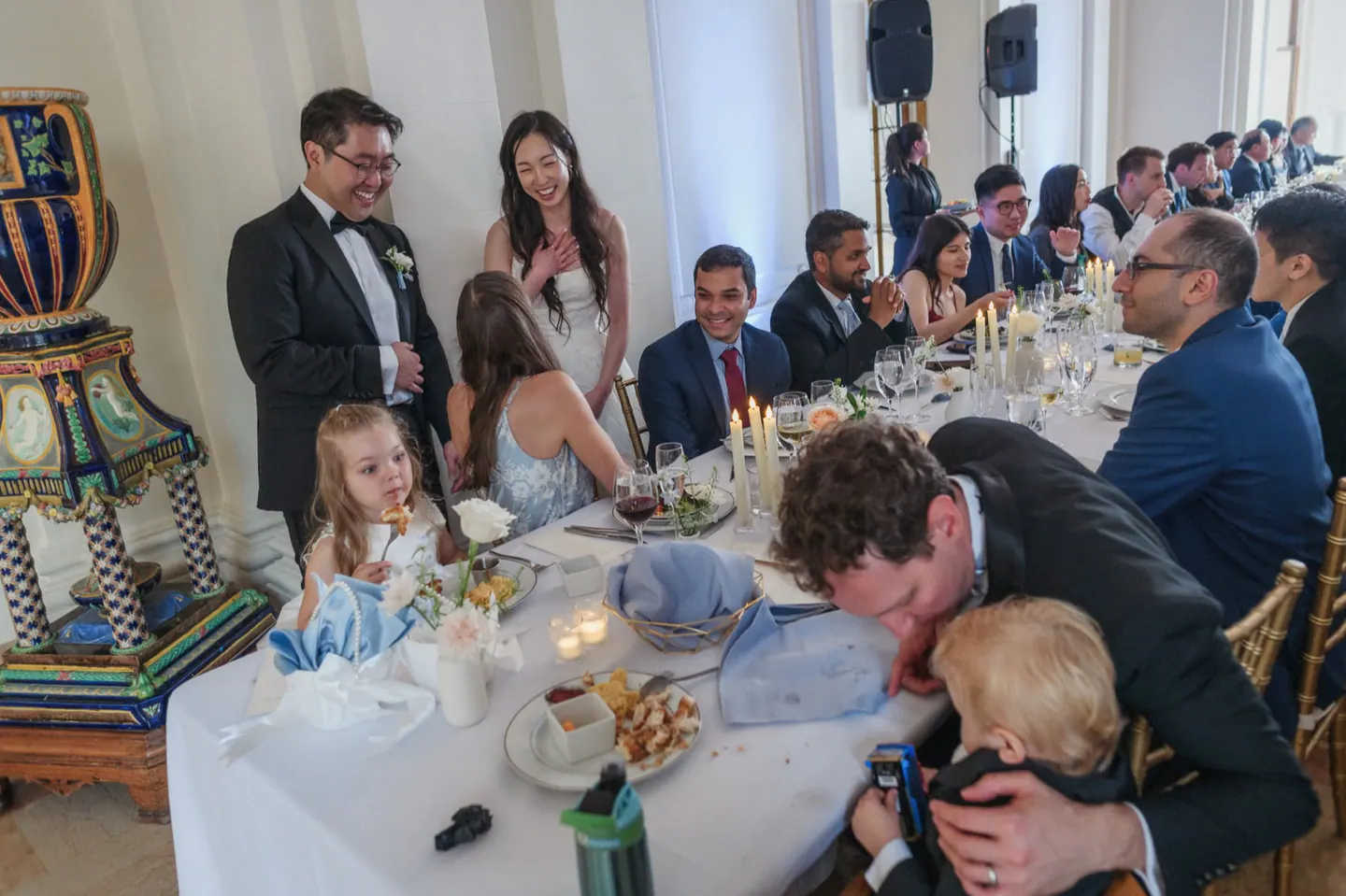
Family gathered together around a wedding dinner
04 · Family gathered together around a wedding dinner
02

Communicate before and at the ceremony.

A website or sign helps, but many guests will not see it. A warm sentence from the officiant immediately before the processional reaches the people at the moment the request matters.

03

Make room for access and family reality.

Some guests may need devices for translation, hearing support, caregiving, or a person who cannot attend. Handle exceptions privately rather than creating a rule that assumes every phone use means distraction.

04

Tell guests when photographs can resume.

People are more likely to put phones away when they know professional photographs will be shared and there will be time after the ceremony for their own pictures. The request should welcome them into the event.

Hospitality before enforcement

An unplugged ceremony works when guests understand the reason.

If faces, attention, privacy, or an unobstructed aisle matter, say so warmly in the invitation, program, sign, or officiant’s opening words. Give guests a clear moment when phones may return and share that professional photographs will be available. A useful request feels like an invitation to participate, not a rule designed to shame the first person who forgets.

Phones are not the only obstruction. Florals, standing guests, videographers, narrow aisles, and photographers can block one another too. Coordinate positions before the ceremony and leave enough aisle width for people to move. The goal is not a photograph with no devices; it is a ceremony where the people present can see and be seen.

  • Explain the reason in one warm sentence
  • Ask the officiant to repeat the request before the processional
  • Coordinate photographer, filmmaker, and aisle positions in advance
  • Give guests a clear time to use phones again

The short version

Keep these decisions visible.

  • One clear behavior the ceremony request is meant to change
  • A concise officiant announcement in addition to written notice
  • Necessary accessibility and remote-family exceptions understood
  • A clear plan for sharing and a natural photo opportunity afterward

Questions couples ask

Use the guide to make a decision, not another mood board.

What should we decide first about family and guests?

A wall of phones in the aisle, guests live-streaming, flash, or constant movement are different issues. A focused request works better than copying unplugged language without knowing why.

What mistake creates the most pressure?

People are more likely to put phones away when they know professional photographs will be shared and there will be time after the ceremony for their own pictures. The request should welcome them into the event.

What is the short, practical version?

Keep these priorities visible: one clear behavior the ceremony request is meant to change; a concise officiant announcement in addition to written notice; necessary accessibility and remote-family exceptions understood; a clear plan for sharing and a natural photo opportunity afterward.