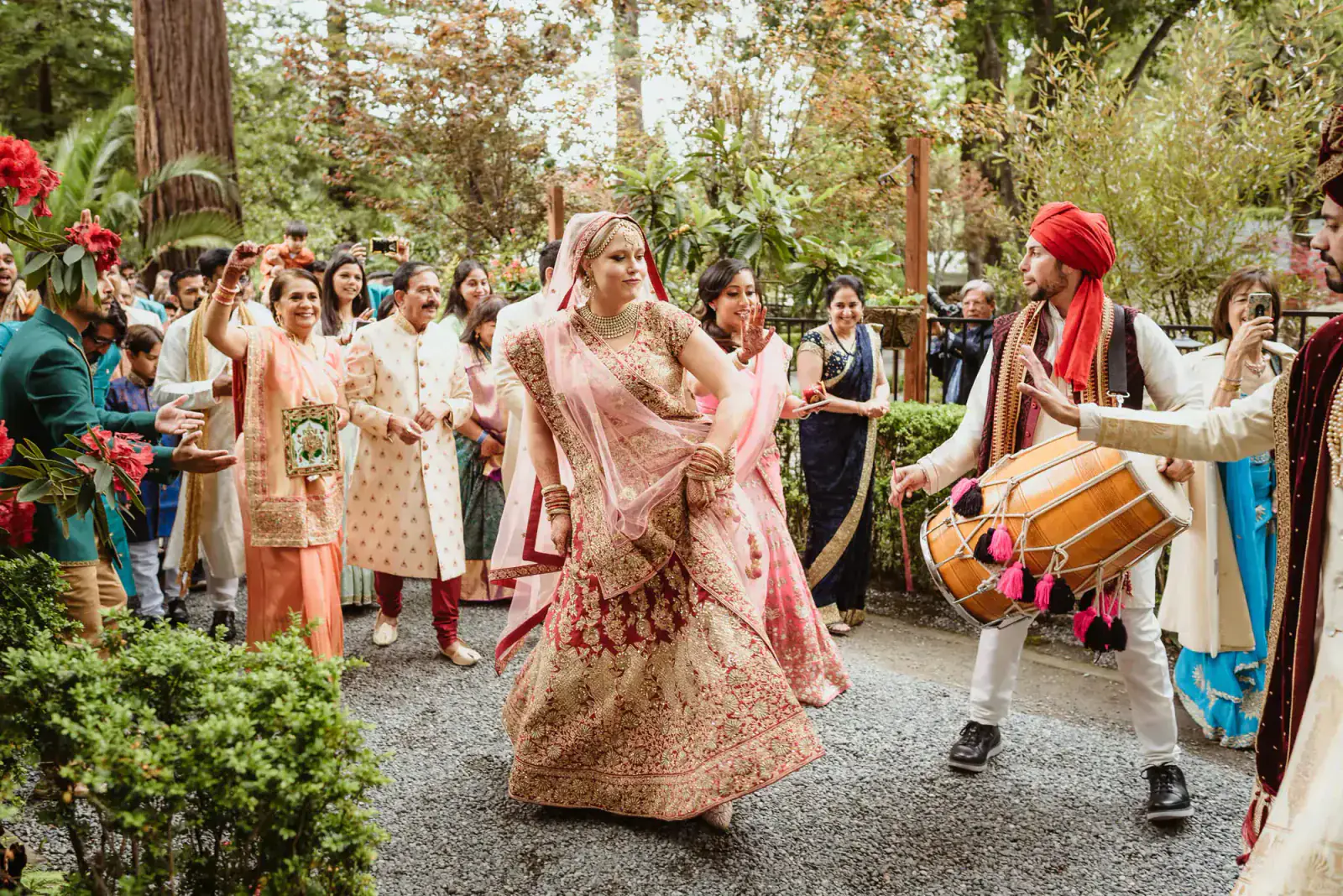
Identify what is unique to each ceremony.
List the rituals, clothing, participants, entrances, family combinations, and emotional expectations that belong to each. Shared elements can happen once; meaningful differences need their own time.


Protect the transition as a real event.
Changing clothes, eating, resetting a space, greeting new guests, and shifting family roles cannot be treated as zero minutes. The transition may also contain some of the most personal photographs of the day.
Divide family photographs intentionally.
Make combinations when the relevant clothing and participants are present instead of repeating every group twice. Relationship labels, names, and one helper who knows both families keep the plan usable.


Give the second ceremony a full arrival.
Guests and the couple need time to enter its emotional world rather than carrying visible hurry from the first. A pause, music, procession, or reset can make the ceremonies connected but distinct.