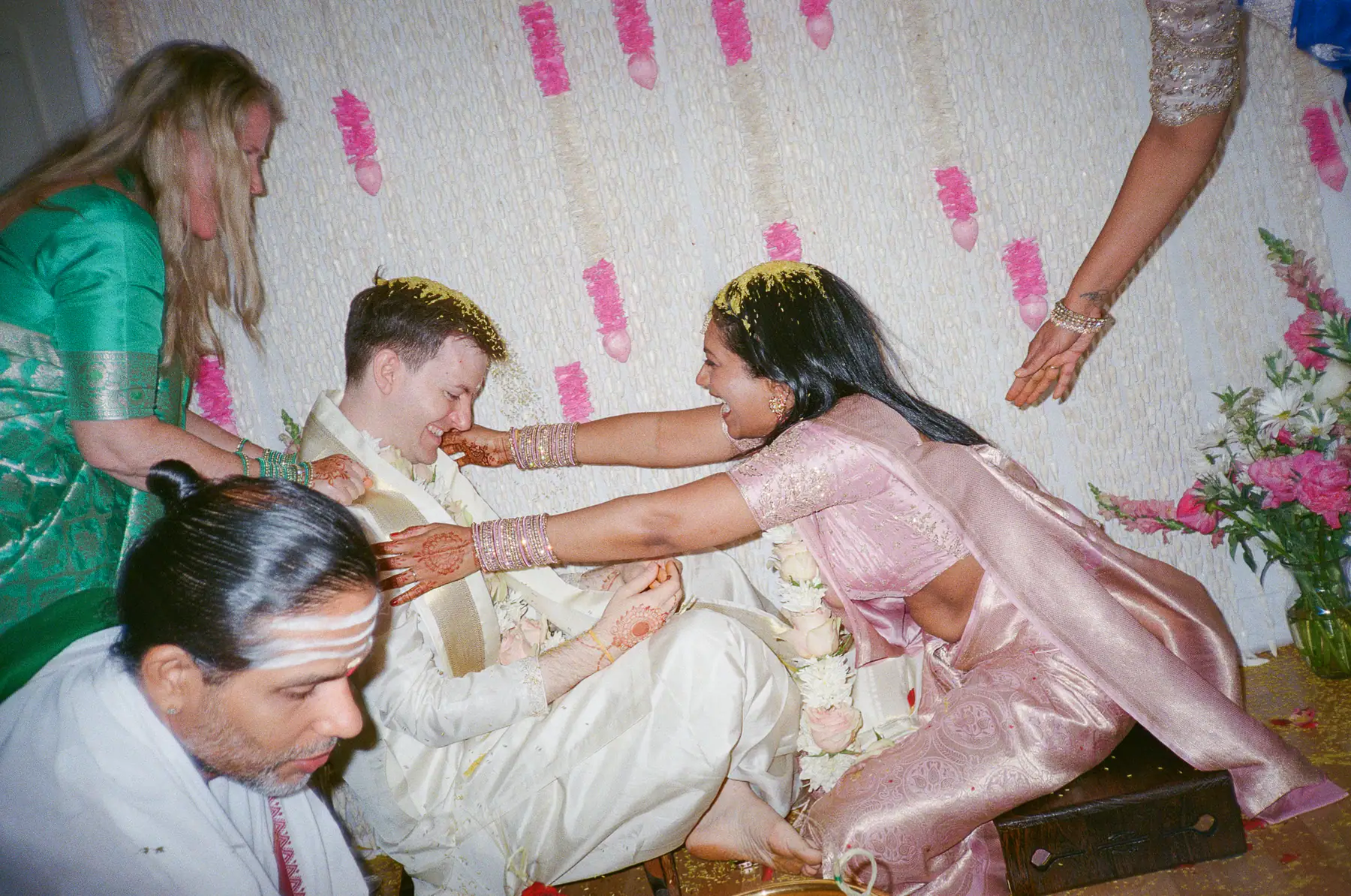
Learn meaning, sequence, and responsibility.
Ask who leads each ritual, what objects matter, where family stands, what may not be interrupted, and which moments happen quickly. Names of traditions are not enough; the photographer needs to understand how this family will practice them.


Build time around transitions.
Clothing changes, room resets, processions, meals, transportation, and family greetings take real time. A schedule that lists only ceremony start times hides the parts where delay and story both happen.
Use more than one perspective when events overlap.
Simultaneous preparation, processions, guest reactions, and separate family rituals may justify a second photographer. The goal is not simply more files; it is preserving events that one person cannot physically witness at once.


Keep the people larger than the program.
A ritual checklist protects necessary coverage, but the complete story also needs anticipation, humor, fatigue, friendship, meals, and the way families encounter one another. Traditions should have context rather than appearing as isolated evidence.