Begin with a reason.
Direction should solve something specific: where to stand in hard light, how to use a room, where hands can rest, or how to begin moving together. If there is no problem, more instruction rarely improves the photograph.


Give one clear instruction at a time.
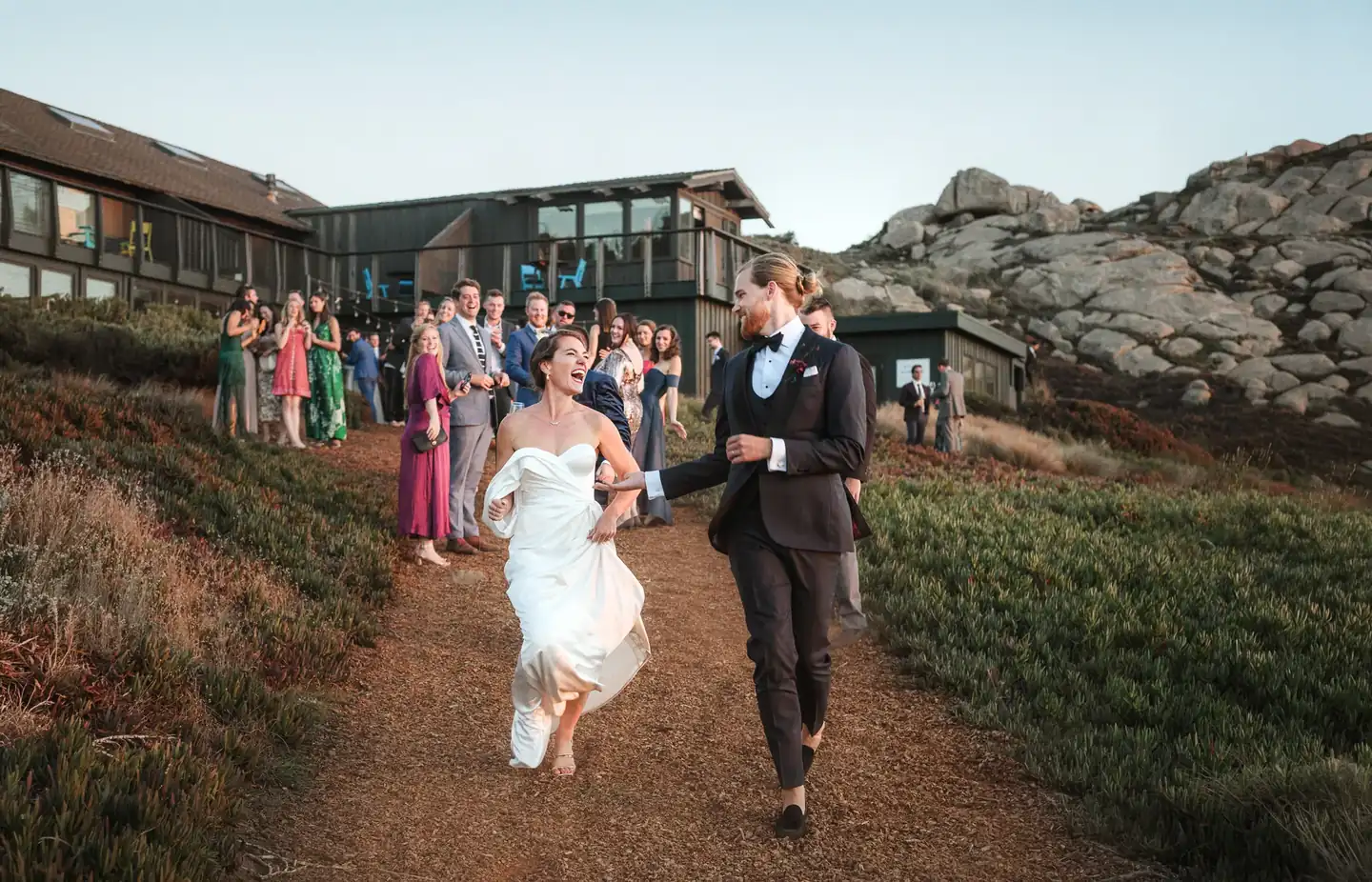
Complicated posing language makes people monitor themselves. A simple adjustment to light, distance, or movement creates enough structure for a real expression or interaction to emerge. The couple already knows how to make each other comfortable; our job is to help them stop monitoring the camera and turn that attention back toward each other.
Stop when the photograph becomes alive.
The useful moment often happens just after people understand the setup and stop thinking about it. Continuing to refine posture and expression can remove the exact thing the direction made possible.


Protect time with guests.
Editorial portraits do not need to consume cocktail hour. A prepared family list, nearby light, and one strong location usually produce more complete work than a long portrait tour.
Let the gallery hold contrast.
A composed portrait can sit beside a messy dance floor, a quiet film frame, and an unplanned reaction. That range is what makes the final sequence feel both beautiful and inhabited.