

Look for transitions, not isolated low-light images.
A dramatic flash portrait proves one technique. A full sequence through cocktails, dinner, speeches, and dancing shows whether the photographer can adapt repeatedly while color and distance change.


Notice whether faces survive the environment.
Redwoods, windows, bright skies, and dark interiors create large exposure differences. The setting should remain recognizable, but faces cannot disappear into muddy shadow or be flattened by indiscriminate light.
Ask when flash is used.
Available light is not morally better, and flash is not automatically harsh. Bounce, direct flash, off-camera light, and ambient exposure create different results. A thoughtful answer explains how the technique supports the scene.
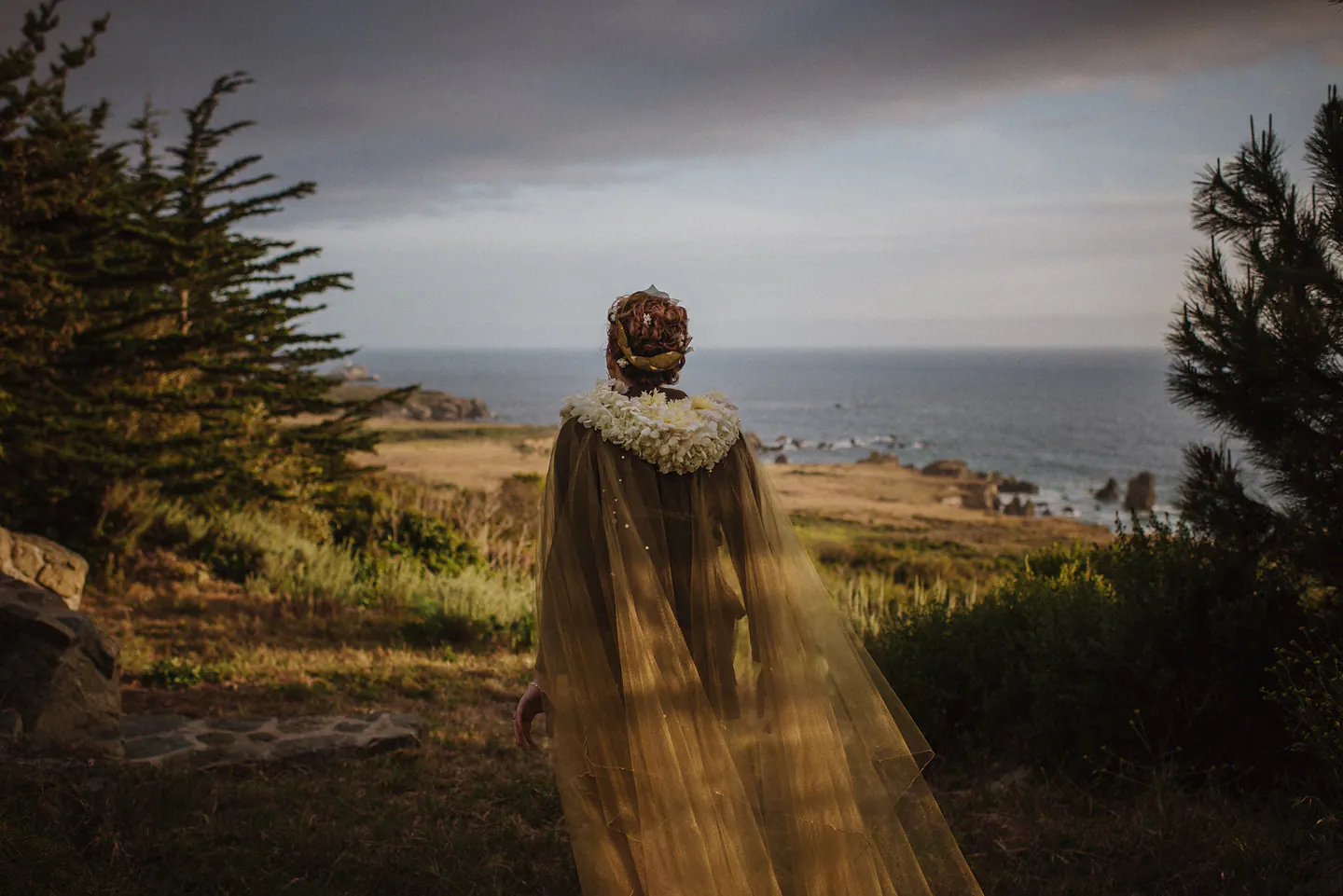


Review midday and bad weather too.
Overhead sun, fog, rain, and wind are as revealing as dark rooms. Look for photographs that remain emotionally alive when the conditions are not romantic. Real consistency is broader than a recognizable editing preset.


